When a One-Page Website Is Actually the Right Choice
Been told a “real” website needs ten pages before it can be taken seriously? Here’s when a single scrolling page is actually the smarter, faster-converting choice — and when it isn’t.
Sound Familiar?
A one-page website puts everything — the pitch, the proof, and the next step — on a single, scrollable page instead of splitting it across separate URLs. Deciding whether that’s right for you isn’t about budget; it’s about how many genuinely different things your business actually needs to say.
Why 'More Pages Means More Credible' Is the Wrong Question
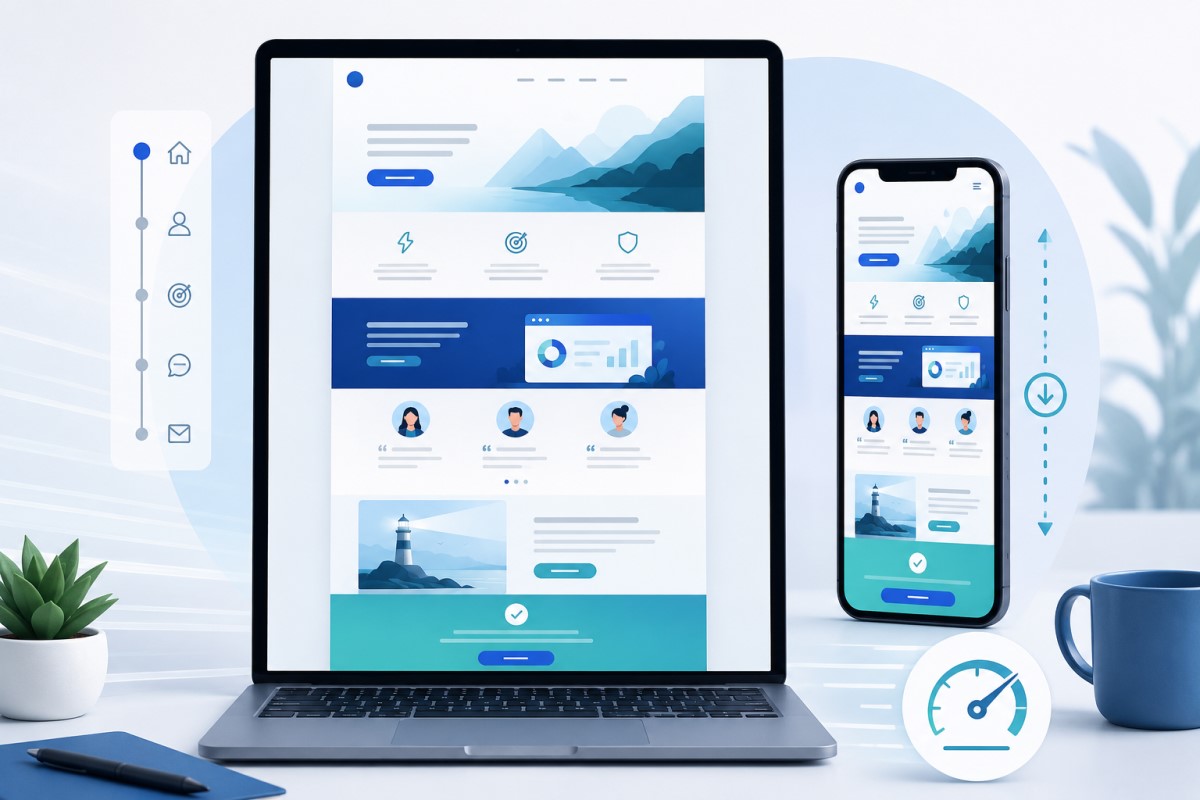
Most first visits to a small-business website now happen on a phone, in a few seconds, often straight from an ad or a social post. A visitor deciding whether to keep reading doesn’t care how many pages a site has — they care whether the first screen answers what you do, who it’s for, and what to do next. A one-page site built around anchor-link navigation can put that answer in front of them immediately, without a menu to explore first.
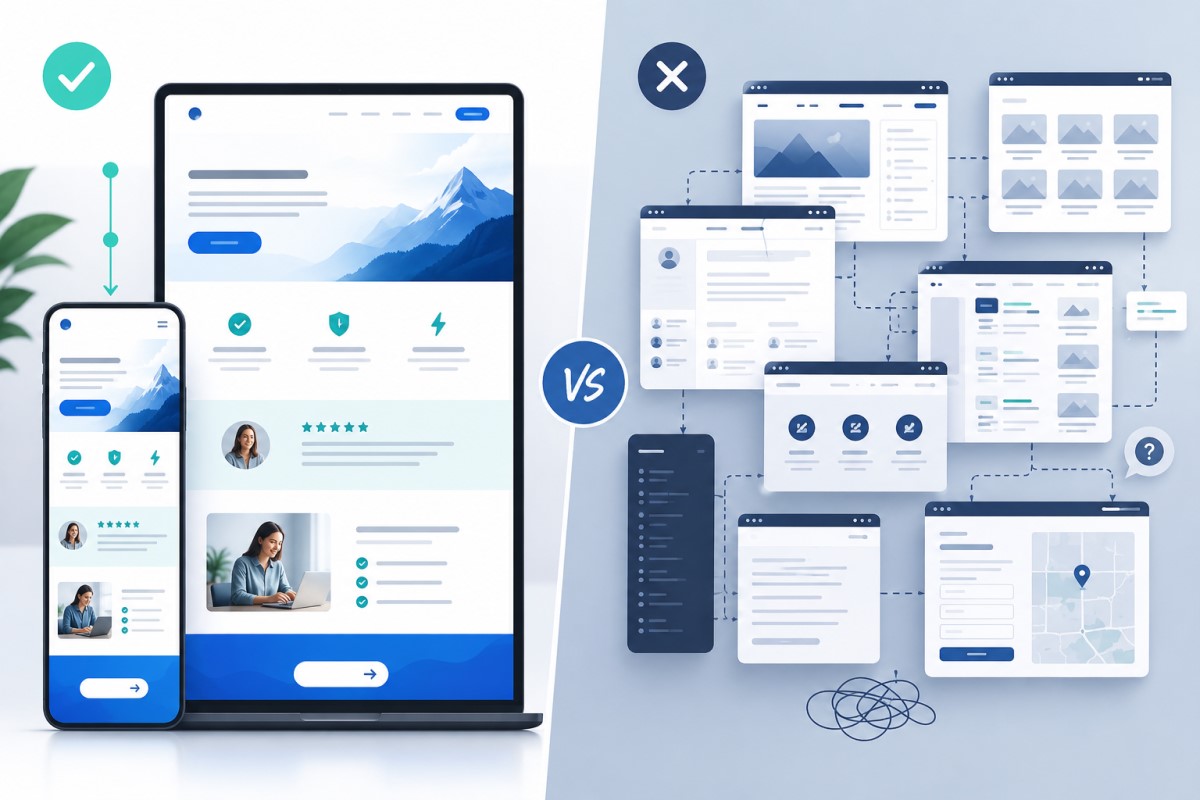
The businesses that struggle with one-page sites are almost never struggling because the format is wrong — they’re struggling because they tried to force a business with several audiences, dozens of products, or a large content library into a single scroll. The format itself converts well; the mismatch happens when it’s used for the wrong kind of business.
Who a One-Page Website Is Actually Built For
The Cost of Building More Pages Than You Need
Many businesses default to a multi-page site “to be safe,” assuming more pages can only help. In practice, extra pages that exist just to fill a menu dilute your message, split your SEO authority across thin content instead of concentrating it, and quietly become the pages nobody updates a year later. Overbuild the structure and you’ll pay more to launch, spend longer maintaining it, and give visitors more chances to click away before they ever reach your call to action.
Inside the Decision: How Each Factor Works
A factor-by-factor breakdown of what actually decides whether one page is enough.

Three questions decide this faster than any design trend: do you have one clear offer, one primary audience, and one main action you want a visitor to take? If all three answers are “yes,” a single well-built page will almost always outperform a bigger site trying to cover more ground. If any answer is “several,” that’s a sign a multi-page structure will serve you better.
A product launch, one core service, or a single app doesn’t need separate pages competing for attention — it needs one page that builds the case from the first scroll to the call to action. The moment you’re selling two unrelated things to two different audiences, a shared page starts working against both.
- Visitors don’t need to compare multiple service pages before deciding
- Your proof — testimonials, results, credentials — fits in a section or two, not a whole resource library
- The path from “interested” to “converted” is short: one form, one call, one purchase
- You can honestly summarize the whole business in under a minute of reading
If you need something live fast — to test an idea, support a short ad campaign, or launch before a deadline — a one-page site is lighter to design, write, and approve than a multi-page build. It’s also cheaper to keep current, since there’s only one page’s worth of content to revisit instead of a dozen sections quietly going stale.
A one-page site only has one URL to rank, so keyword choice matters more, not less: use a single clear H1, structured H2s per section that match what visitors are actually searching for, and push page speed hard since that one page carries the entire site’s reputation. Add schema markup (LocalBusiness, Organization, or Product) and write one genuinely strong meta title and description — you only get a single shot at the search snippet.
Is a One-Page Website Right for You?
One Page Works If…
- You can describe your whole offer honestly in a few short sections
- There’s one clear action you want every visitor to take
- You serve a single audience, not several with different needs
- You need the site live fast, for a launch, campaign, or MVP
- Content updates will stay light — no growing blog or product catalog planned
You Need More Pages If…
- You’re targeting several distinct audiences with different needs (e.g. B2B and B2C)
- You sell multiple products or services that each deserve their own explanation
- You plan to publish ongoing content like a blog or resource library
- You’re chasing rankings for many different, unrelated search terms
- You’re already cramming five unrelated offers into five sections just to fit them in
What Works
- Build the page around one clear offer and one repeated call to action
- Use anchor-link navigation so visitors can jump straight to what matters to them
- Choose your target keywords deliberately since there’s only one URL to rank
- Push page speed and mobile performance hard — it’s the whole site’s reputation
- Add structured data and a strong meta title and description
What to Avoid
- Cramming several unrelated offers or audiences into one page just to avoid building more pages
- Treating one-page as “the cheap option” instead of a deliberate structural choice
- Skipping SEO structure because “it’s just one page anyway”
- Ignoring page speed on the one page that has to carry the entire site
One Page, Done Right
A one-page website isn’t a lesser version of a “real” website — it’s a deliberate design choice suited to a specific kind of goal. Get the structure right for what your business actually needs to say, and a single page can convert better than a much bigger site ever could.